
Sub-Total: $0.00
The Story Inside Every Opal
Discover how opal forms and why Spencer opal is truly rare.
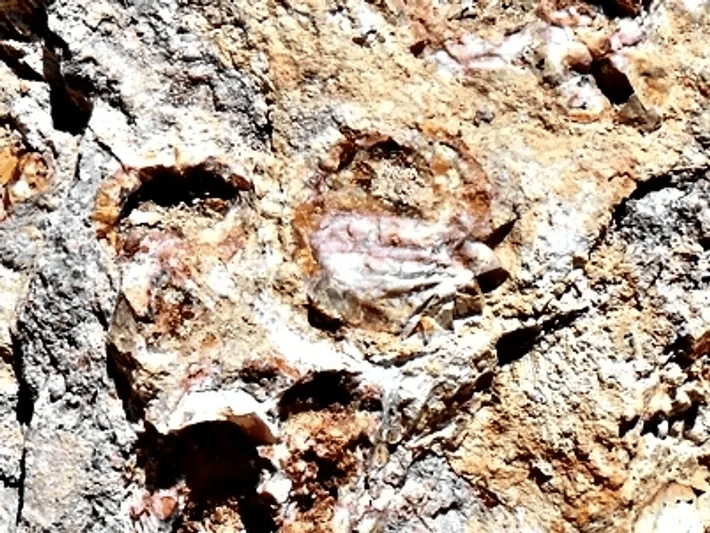
The Scientific Stuff
Opal is a hydrated amorphous form of silica (SiO2·nH2O); its water content may range from 3 to 21% by weight but is usually between 6 and 10%. Because of its amorphous character, it is classed as a mineraloid, unlike crystalline forms of silica, which are classed as minerals. Spencer opal has a very low water content, making it very stable in most cases.
There are basically two kinds of opal: precious and common. Precious opal displays play-of-color; common opal does not. The internal structure of precious opal causes it to diffract light, resulting in play-of-color. Depending on the conditions in which it formed, opal may be transparent, translucent, or opaque, and the background color may be white, black, or nearly any color of the visual spectrum. Black opal with a red play of color is considered to be the rarest, whereas white, gray, and green are the most common. Spencer opal offers something extremely unique: pink-based opal. I believe that Spencer is the only source for pink-based opal with color play on earth.
Spencer Opal Glows
Ultraviolet Fluorescence. Some Spencer opals will glow under long- and short-wave ultraviolet lights. I have several very nice "glowers". Mostly greens and reds. Amazing how different they can look under long wave vs. short wave. Spencer opal harbors some rare earth elements that fluoresce wonderfully, and as the name says, some are quite rare. Many years ago a Fluorescent Mineral Society used to visit the mine as a group to search for those elusive rare earth glowers.
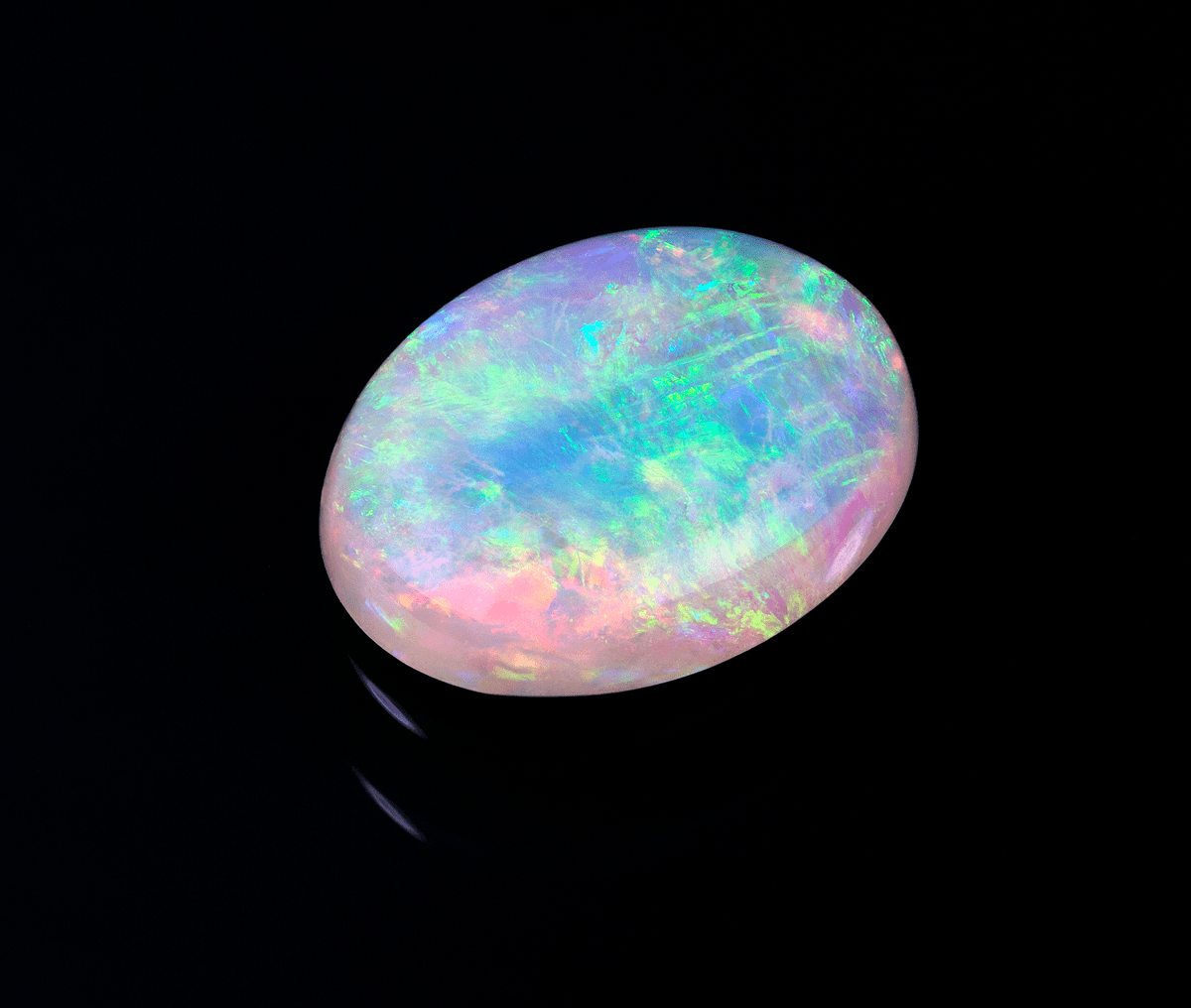
Where Opal is Found
Opal is found in many parts of the world. Australia, Ethiopia, Mexico, the modern-day Czech Republic, Hungary, and, of course, the USA and Spencer, Idaho. They are not all the same. Mexican opal, for example, has, for the most part, an orange base with or without a play of color and is mostly translucent. Spencer opal forms perfectly flat in very thin layers the vast majority of the time, making it the best opal in the world for triplets.
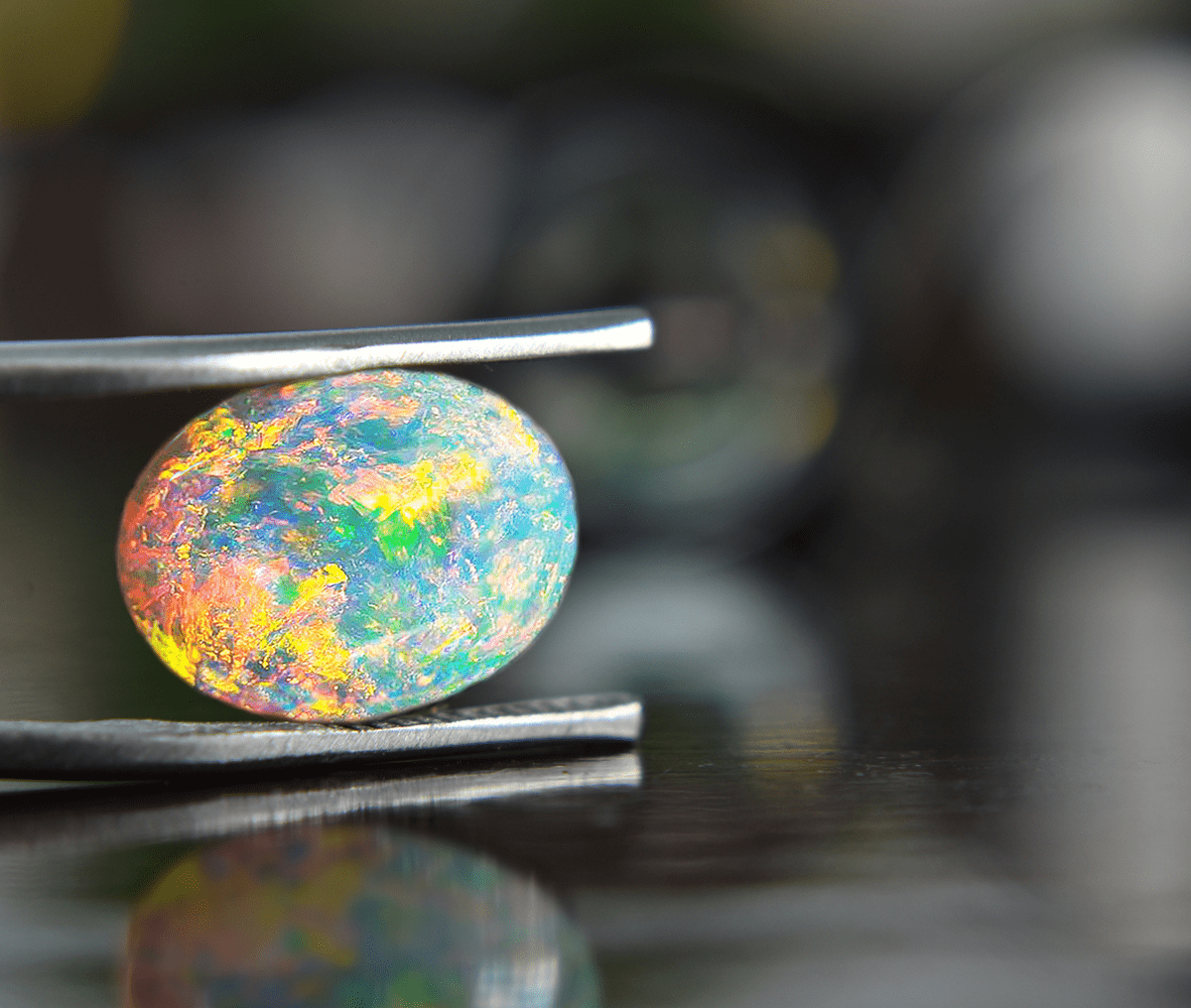
Opal Origins
Opal has a long history, some recorded, some not. The first recorded name was offered by the Romans. They called it "Opalus" which means precious stone. It was treasured by ancient Romans 200 years before Christ. The ancient Greeks called it "Opallos" which means "to see a color change". Maybe the most famous description of opal was offered by Pliny the Elder, a Roman philosopher: "From within this precious stone one can see the living fire of ruby, the glorious purple of amethyst, and the sea green of emerald all playing together in an incredible display of color and light." (Several versions of this quote have been offered over the centuries.)
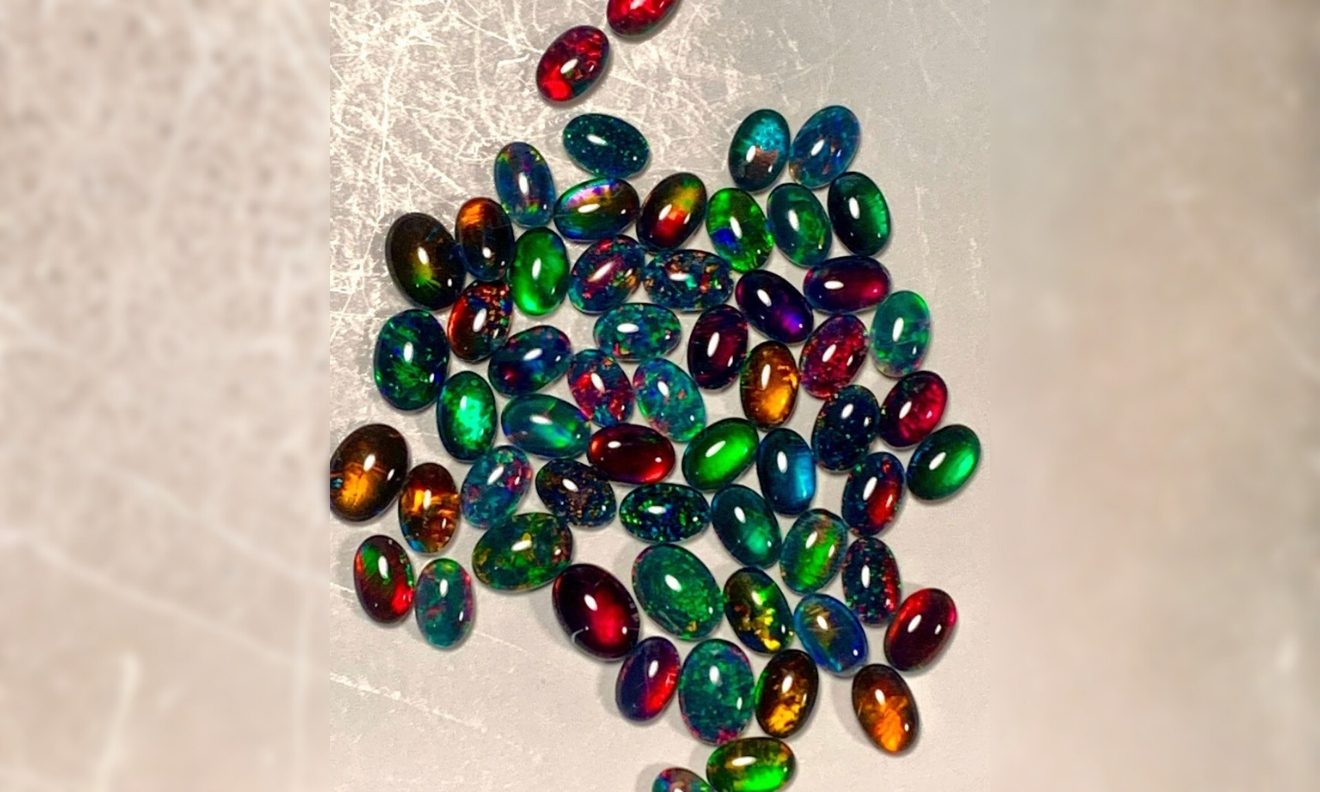
Spencer Opal Formation
The primary formation of the mine is a rhyolite and obsidian flow full of gas pockets. The opal solution, or silica, was a secondary deposit carried by geyser activity. As a result of several eruptions over a period of time, the opal lies in layers within the gas pockets.
This formation information is courtesy of the Spencer Opal Mines.